Muir Woods Sausalito Tour
Visitor Guide

Does Muir Woods Have Giant Sequoias

Two enormous trees share the redwood name, and only one of them grows in this fog-fed canyon north of the Golden Gate. Travellers arrive expecting the massive barrel trunks of the Sierra Nevada and find something taller, narrower and darker instead. This does muir woods have giant sequoias guide sets the record straight before you book a morning slot.

11 min read Updated 2026-08-24 Fact-checked
Does Muir Woods Have Giant Sequoias

Quick answer

No. Muir Woods National Monument protects coast redwoods, Sequoia sempervirens, not the giant sequoias of the Sierra Nevada. The two are cousins in the same family, but only the coastal species grows here, roughly 12 miles north of San Francisco. Entry costs 15 USD per person for ages 16 and over, and the monument opens daily at 08:00.

The tallest tree standing in Redwood Creek canyon reaches about 258 feet, taller than any giant sequoia in California — yet it is not one. That single fact explains most of the confusion behind the question does muir woods have giant sequoias, because height and bulk are two different measures of enormity, and the two redwood species split them between themselves. What visitors walk beneath here is Sequoia sempervirens, the coast redwood, a species tied to a narrow fog belt running from Big Sur to southern Oregon. Mount Tamalpais pulls marine air over the ridge, the canyon traps it, and the trees drink the condensation through their needles. That microclimate is the whole reason the grove survived logging in the first place: the canyon was too steep and too awkward to cut profitably, so William Kent bought it and handed it to the federal government in 1908. The Sierra Nevada, by contrast, gives its giant sequoias dry granite slopes, snowpack and fire — an entirely different set of conditions three hundred miles inland. No amount of searching Cathedral Grove or Bohemian Grove will turn up one of those barrel-chested trunks, because the species has never grown wild on this side of the Central Valley. Knowing that changes how you plan the visit rather than whether you make it. Travellers who add the monument to a wider Marin County itinerary, or reach it as part of a muir woods sausalito tour, often expect a half-day of walking; in practice the main boardwalk loop is short, level and easily covered in under an hour, which leaves room for the longer trails climbing toward the ridge. Photographers should know that the canopy closes overhead and the light stays low and green for most of the day — bring a fast lens or accept the dimness. Anyone whose heart is set on the true Sierra giants should treat this as a separate trip entirely, to Sequoia National Park, Kings Canyon or Yosemite's Mariposa Grove, all of which sit four to six hours away by road. So the honest answer to does muir woods have giant sequoias is a clean no, followed by a better question: what does it have instead. It has an old-growth coast redwood stand within an hour of a major city, one of the last uncut examples anywhere, protected since the Theodore Roosevelt administration. Judged on its own terms rather than against the Sierra, the canyon holds its ground.

“Height and bulk are two different measures of enormity, and the two redwood species split them between themselves.”
Facts

Does Muir Woods Have Giant Sequoias, and What Trees Grow There?

Short answer: Muir Woods does not protect a giant sequoia grove. Its signature trees are coast redwoods, the tallest tree species on Earth, so the visitor experience is about height, shade, and an old-growth redwood ecosystem rather than the bulk of giant sequoias.

1.

Coast redwoods rule here

The National Park Service identifies Muir Woods as an old-growth coast redwood forest, with coast redwoods (Sequoia sempervirens) as the dominant trees. A park page also notes the monument protects one of the last remaining old-growth coast redwood forests.

2.

Not giant sequoias

The famous big-tree species at Muir Woods is coast redwood, not giant sequoia (Sequoiadendron giganteum). NPS species guidance separates the two as related but different trees that live in different places and grow in different ways.

3.

Same family, different species

Both trees belong to the cypress family, but they are not the same species. The NPS describes coast redwoods as the world’s tallest tree and giant sequoias as the world’s largest tree overall.

4.

Height over bulk

Coast redwoods are known for extreme height, while giant sequoias are known for massive trunk volume. That is why Muir Woods feels like a cathedral of soaring trunks rather than a grove of the biggest trunks.

5.

Muir Woods has redwood giants

The tallest coastal redwood in Muir Woods is reported by NPS sources at about 258 to 260 feet. The park’s redwoods are also very old, with many trees estimated at 600 to 800 years and some over 1,000 years old.

6.

Douglas-fir joins the canopy

Muir Woods is not just redwoods. NPS plant pages note scattered Douglas-firs among the main trees, along with other forest companions that share the cool, shady creek-valley habitat.

7.

Look for the understory too

The forest floor is part of the story, with shade-loving plants such as ferns and redwood sorrel growing beneath the canopy. Coastal fog helps sustain the ecosystem by adding moisture even when rain is scarce.

8.

Best tree takeaway

If you came specifically for giant sequoias, Muir Woods is not the place for that species. If you want to see a classic old-growth coast redwood forest, this is one of the easiest places near San Francisco to do it.

What to see

Does Muir Woods Have Giant Sequoias, or Mostly Coast Redwoods? What You Will See

Muir Woods does not have giant sequoias. What you will actually see are old-growth coast redwoods, with a few other forest species mixed in, plus a handful of named groves, creekside crossings, and quiet viewing areas that define the visit.

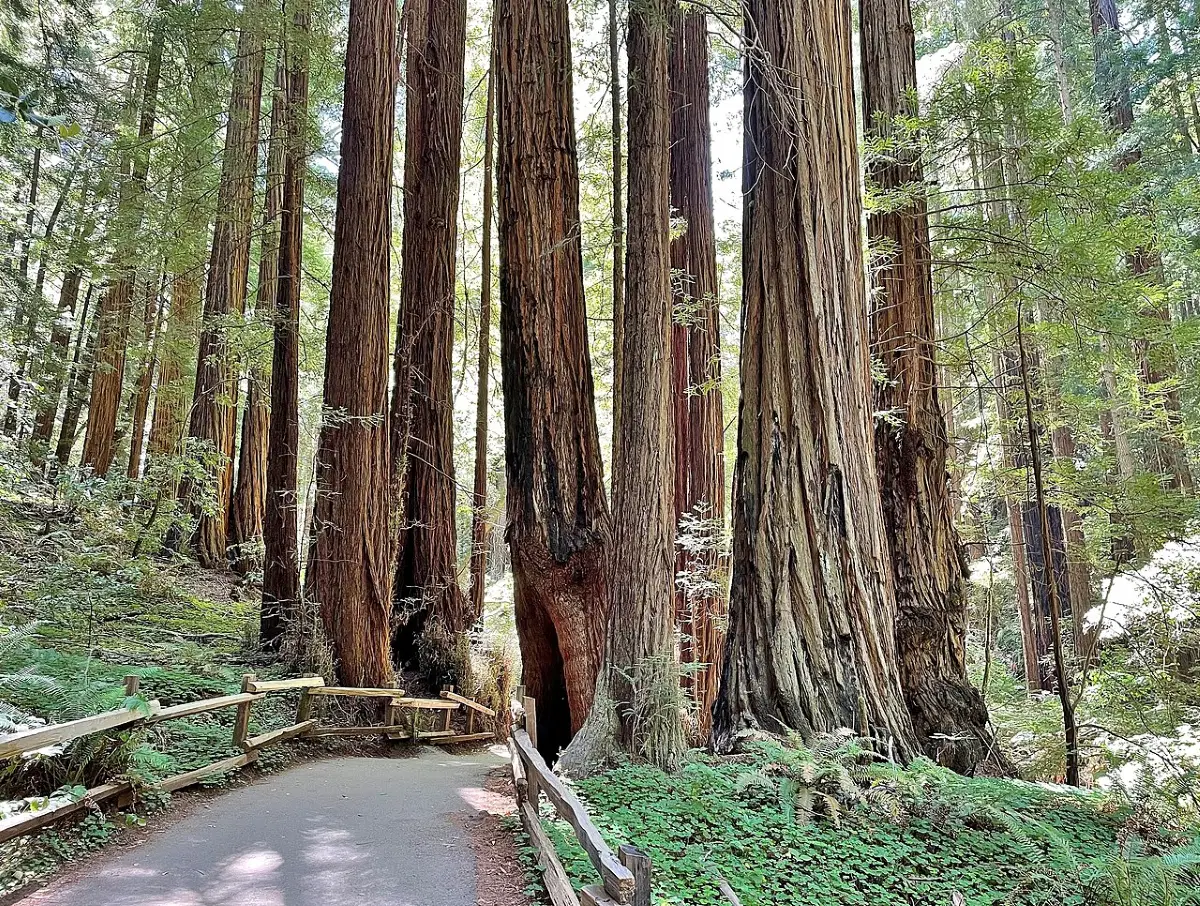
Cathedral Grove

Cathedral Grove

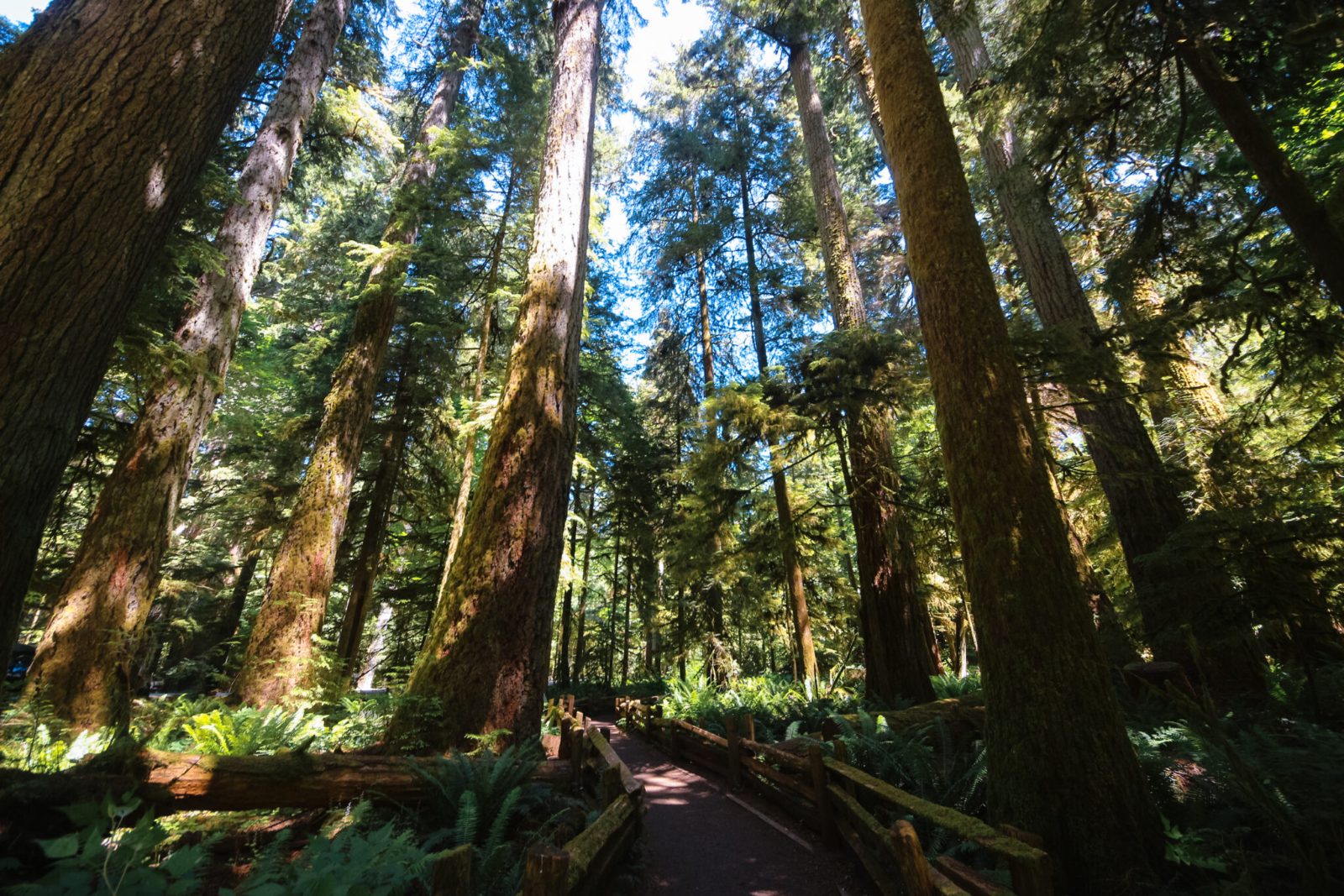
This is the park’s best-known quiet preserve and home to some of the tallest, oldest redwoods in Muir Woods. It is the place to slow down and look up, because the canopy and straight trunks show the scale of the forest best here.

Pause at the loop and look straight up.
Redwood Creek Trail

Redwood Creek Trail

Also called the Main Trail, this paved route gives the clearest first look at the redwood forest and the stream corridor that supports it. It is the easiest way to compare light, height, and understory density as you move through the park.

Walk the paved trail near the creek.

Bridge 2

Bridge 2

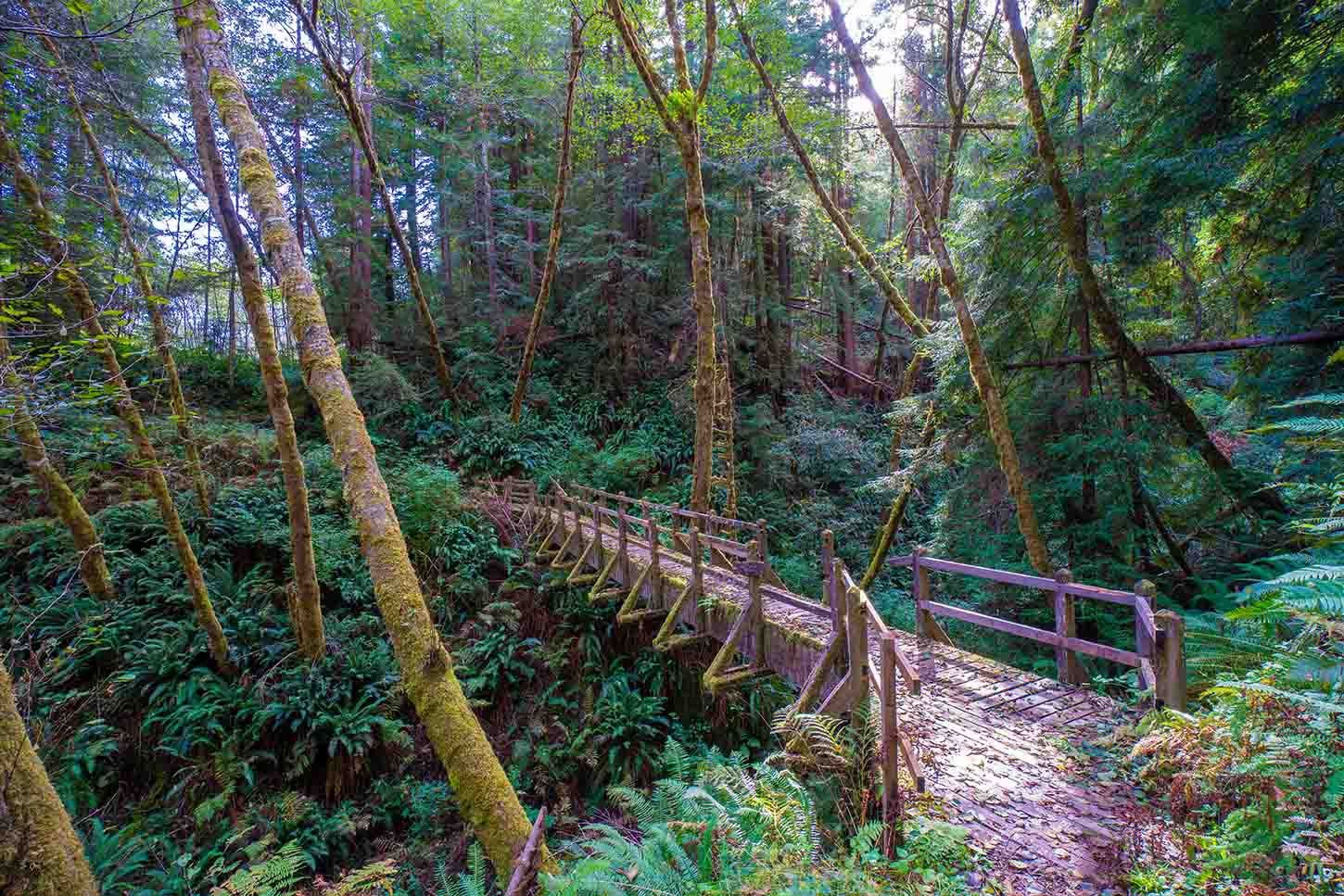
Muir Woods has five bridges, and Bridge 2 is one of the most practical places to study the creekside setting. From there, you can see how the redwoods, water, and shaded banks fit together in a narrow canyon.

Stop on the bridge and scan both banks.

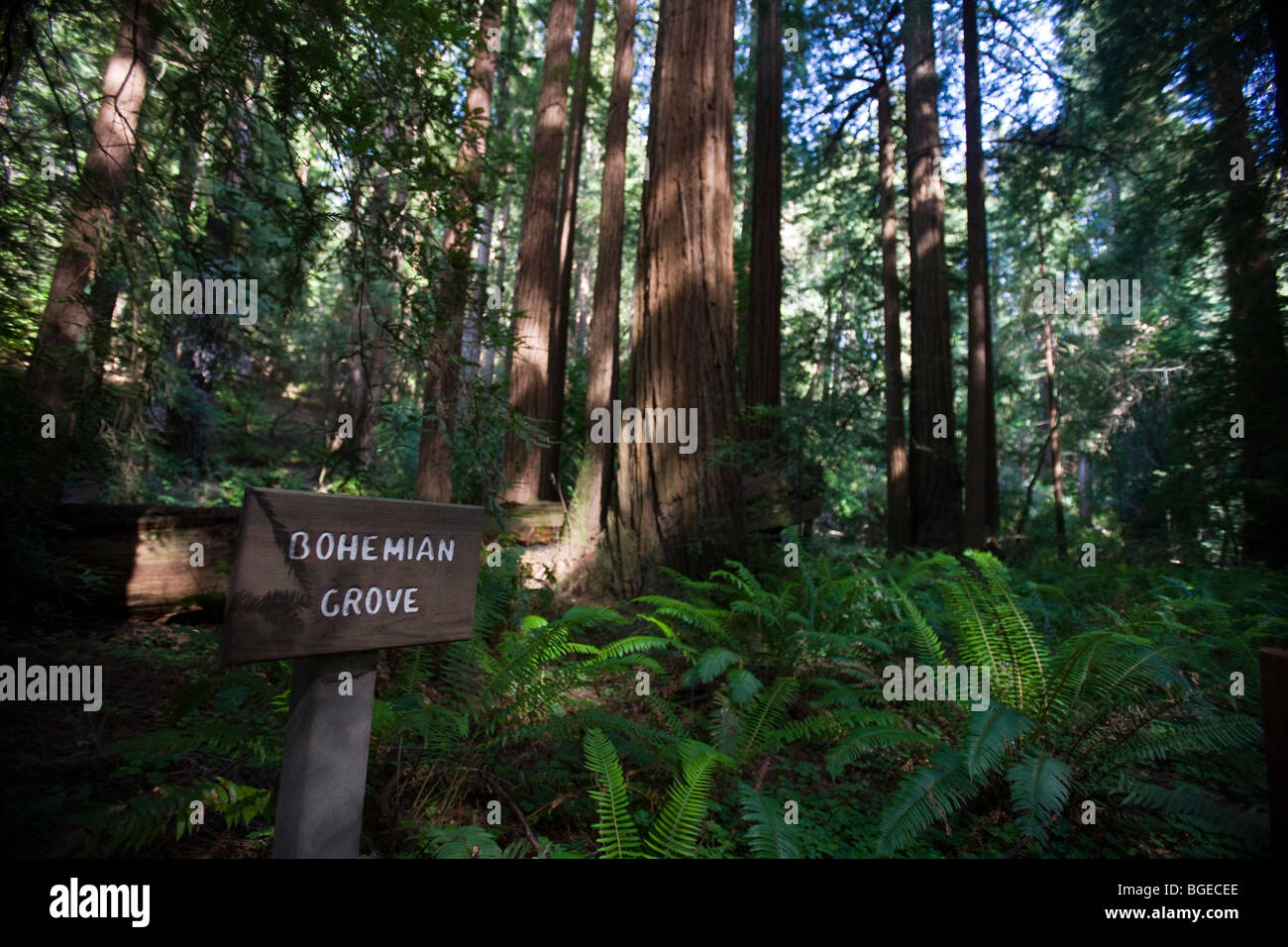
Bohemian Grove

Bohemian Grove

This named grove is one of the forest clearings mentioned by the park, and it is useful for seeing how light changes the feel of the redwood stands. It is a good place to notice the open understory and the fire-scarred character of some trees.

Compare open ground with dense canopy.

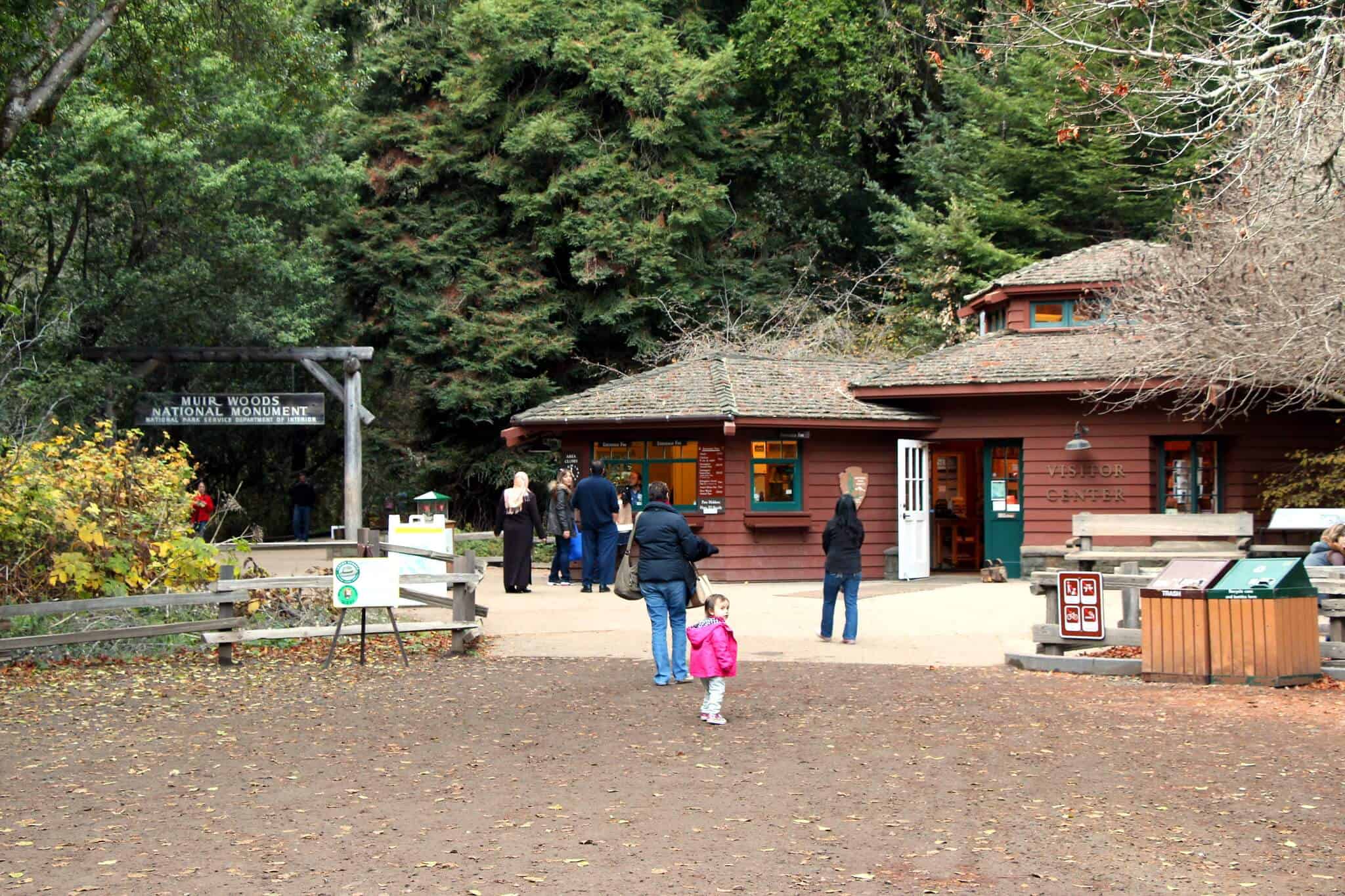
Visitor Center exhibits

Visitor Center exhibits

The visitor center helps connect what you see outside with the forest’s ecology and the redwood versus sequoia distinction. It is the right stop if you want a quick visual framework before or after walking the trails.

Start here before heading onto the trails.

Directions

Getting to Muir Woods for a Giant-Tree Visit

Muir Woods National Monument is at Muir Woods National Monument, 1 Muir Woods Rd, Mill Valley, CA 94941. The easiest approach is to plan your route before you leave, since the roads are narrow and parking is limited.

Car 40 min

US-101 to CA-1, then Muir Woods Rd to the main entrance at 1 Muir Woods Rd, Mill Valley, CA 94941

Bus 90 min

Marin Transit Route 61 to Panoramic Highway and Ridge Avenue, then walk via Panoramic Trail and Canopy View Trail

Taxi 35 min

Taxi or rideshare to the main entrance at 1 Muir Woods Rd, Mill Valley, CA 94941

Boat Varies

Golden Gate Ferry to a local ferry terminal, then the seasonal Muir Woods Shuttle to the park entrance

Arrive with your parking or shuttle reservation already set, and use the main entrance at 1 Muir Woods Rd, Mill Valley, CA 94941. The best arrival window is 08:00–10:00, when crowds are lighter and the morning light is softer, and parking is limited enough that advance planning matters.

Insider tips

Practical Tips for a Muir Woods Visit Focused on Giant Trees

Yes, but Muir Woods is known for coast redwoods, not giant sequoias, so plan your visit around the forest conditions that make those trees easier to enjoy.

1

Download offline maps

Cell service can be patchy in forested canyons, so save your route and parking or shuttle details before you arrive. The NPS app can also help with maps and self-guided information if your signal drops.

2

Wear traction-friendly shoes

The main paths can stay damp and slick from shade and fog, especially on boardwalks and lower trails near Redwood Creek. Choose shoes with real tread rather than smooth soles.

3

Bring a light layer

Temperatures inside the canyon can feel noticeably cooler than nearby Marin towns. A thin jacket or fleece is useful even on mild days.

4

Plan for soft light

If you want photos of the trunks and canopy, morning light is usually easier to work with than harsh midday sun. The forest reads better with a slower pace and a stop at creekside viewpoints.

5

Stay on maintained paths

The roots, mud, and narrow side slopes are easy to damage and can be hazardous after rain. Sticking to the boardwalks and signed trails also keeps you closer to the tallest trees.

6

Check for quiet moments

Arrive when the forest is less crowded if you want to hear creek water, birds, and wind in the canopy. Those quieter periods make it easier to appreciate scale without stopping in foot traffic.

7

Read tree labels

The park’s signage helps you confirm what you are looking at, which matters because visitors often mix up coast redwoods and giant sequoias. A quick look at labels keeps the visit focused on the right species.

Book

Check availability

Frequently asked

Does Muir Woods have giant sequoias? FAQ

Everything you need to know about does muir woods have giant sequoias

Does Muir Woods have giant sequoias, or coast redwoods?

No, Muir Woods does not have giant sequoias. It is known for coast redwoods, the tallest type of tree in the world, in an old-growth redwood forest. If you were searching does muir woods have giant sequoias, the short answer is that the grove is redwood-focused, not a giant sequoia grove.

What trees will I actually see if I ask, does Muir Woods have giant sequoias?

You will see coast redwoods, Redwood Creek, ferny understory, and a classic cathedral-like forest canopy. The common comparison is giant sequoia vs coast redwood, but Muir Woods is the place for coastal redwoods rather than Sequoiadendron giganteum.

Is Muir Woods worth visiting if I want giant sequoias in Marin County?

Yes, if your goal is to experience a famous Bay Area redwood forest near Sausalito and Mill Valley, Muir Woods fits well. It is one of the most visited Marin County landmarks for old-growth forest scenery, even though the answer to does muir woods have giant sequoias is no.

Do I need a reservation to see the redwood forest at Muir Woods?

Reservations matter for getting in smoothly because parking and shuttle reservations are required for vehicles and shuttle riders. The official park also notes that public transit directly to the main entrance is limited to the seasonal Muir Woods shuttle, so plan ahead before you go.

How much does it cost to visit Muir Woods?

The standard entrance fee is 15 USD per person for ages 16 and older. Parking and shuttle reservation fees are separate from the entrance fee, so the total can vary depending on how you arrive.

What is the best time to arrive at Muir Woods?

The best arrival window is 08:00–10:00, when crowds are lighter and the morning light is softer. That timing also pairs well with the park’s early opening, which helps keep a short visit relaxed and efficient.

Can kids manage the main Muir Woods trails?

Yes, families with kids can manage the main loop trails because the park includes short, easy walks as well as longer options. A stroller is not ideal on all paths, but the main redwood groves are accessible enough for a simple family outing.

What is the common mistake visitors make about Muir Woods trees?

The biggest mistake is assuming Muir Woods has giant sequoias because both trees are iconic California conifers. In reality, the forest here is a coast redwood site, so if you want giant sequoias specifically, you should look for a different park.

Keep reading

More guides & pages